Maven
Designing a brand, AI-personalization, and MVP prototype to sell a new social e-commerce platform
My Role
Senior Product Designer
Visual Designer
TImeline
3 Months
2024
Pitched to
Global Finance Companies
Global Entertainment Conglomerate
The Challenge
A neighboring venture building team tapped our design studio for help designing a modern, AI-powered e-commerce platform for both consumers and influencers alike. After the scope of the project was determined from a rough concept, I was pulled in to help with a new visual design and enhancing the prototype to fully visualize the concept for potential investors.
Our Impact
Delivering high-fidelity, animated MVP prototypes backed by elaborate research and value proposition for multiple potential investors, our team created an end-to-end concept that was used to pitch to multiple investors and opened our studio's door to more opportunities.
The scope and execution of our design work for Maven was beyond our studio's normal standard and became a new source of truth example for future work with similar deliverables.
My Approach
While UX research, user personas & journey maps, wireframes, and development audits were led by my teammates, I elevated the brand design & UI visuals, ideated on AI-personalization & product features, and created high-fidelity prototypes & animations.
01 - Brand Research
Design hand-off audit
Competitive brand analysis
Color theory & moodboarding
02 - Visual Implementation
Brand visuals exploration
UI design
AI visualization design
03 - Art of the Possible
Conversational AI assistance
Integrated shopping experience
Standing out in a sea of competitors
04 - MVP Prototype
Animations & microanimations
Investor value proposition
Interactive journey map
A look into the concept for an AI-powered e-commerce platform.
01 - Brand Research
I joined the project during the brand research phase, where I was given the original designs from where the project was handed-off from another team. I worked closely with my creative director to flesh out a direction for the visual experience, and started researching competitors in the space to get a better understanding of what defines success in today's market.
Hand-off audit
A left-behind project was picked up by a venture-building team with our studio to help take it in a different direction:
appeal to influencers & shoppers alike
compete against modern influencer-centered shopping apps (e.g. LTK)
lead with AI-personalization
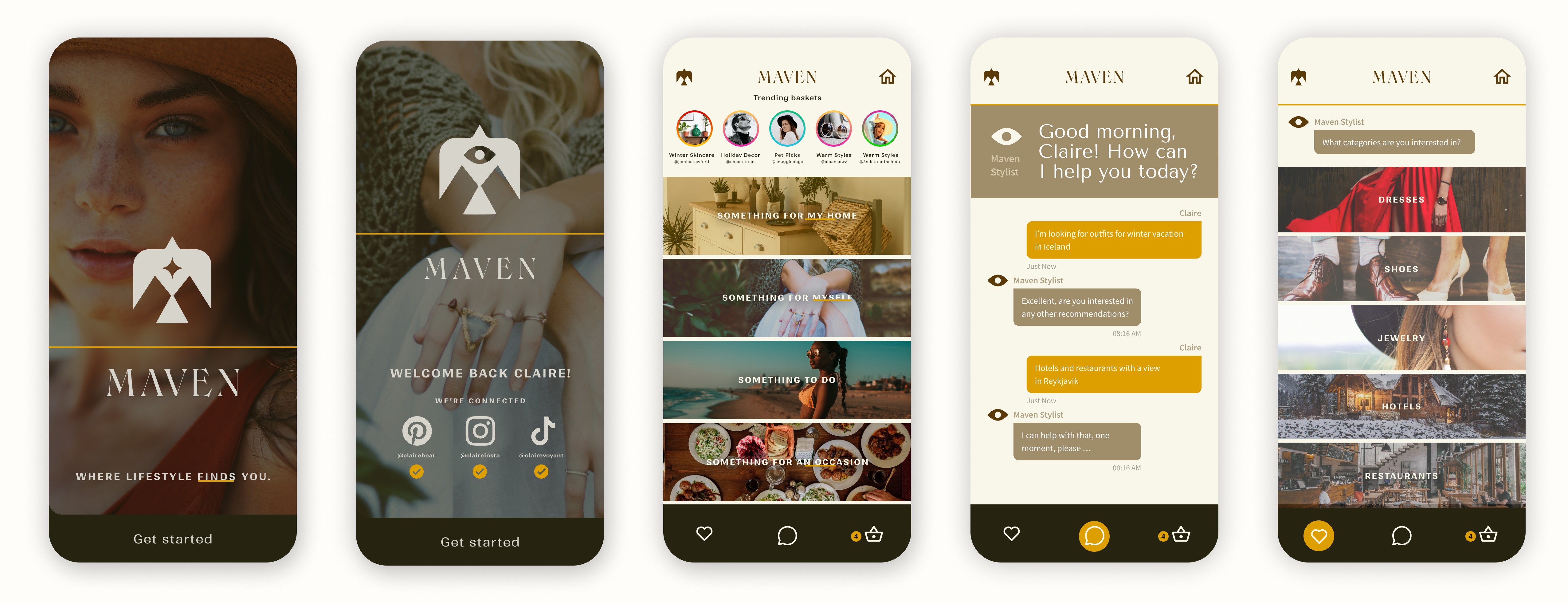
Some of the original designs the new team started with
Competitive brand analysis
I cross-referenced trending shopping apps, social media, and influencer media.
limitless scrolling / content generation
social media linking / integrated app experience
intelligent recommendations & algorithm
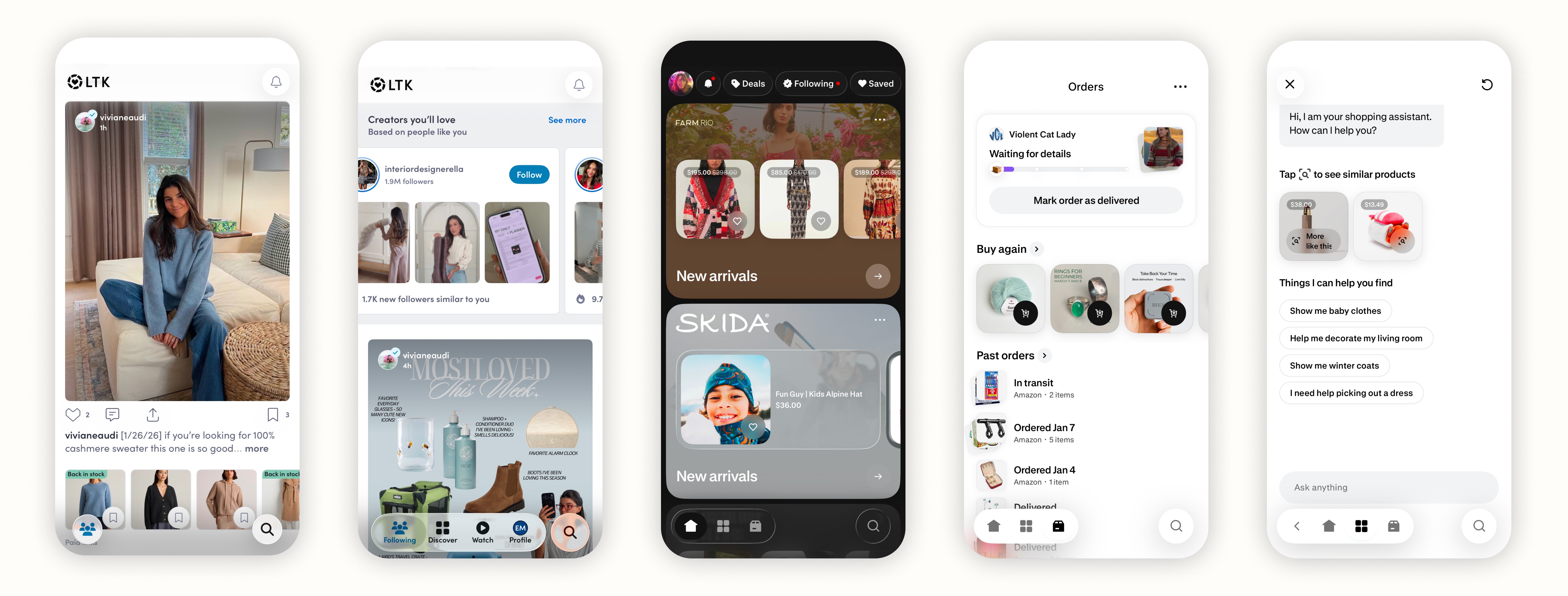
I examined integrated apps like LTK, ShopMy, Shop by Shopify, as well as influencer-heavy social media like Instagram and TikTok, and popular shopping apps like Amazon and Target.
Color theory & moodboarding
Our goals went beyond functionality and app integration – we wanted something that stood out.
utilized color theory to pick popular base colors that read: imaginative, intelligent, health, and growth
pulled inspiration from bold & attention grabbing designs
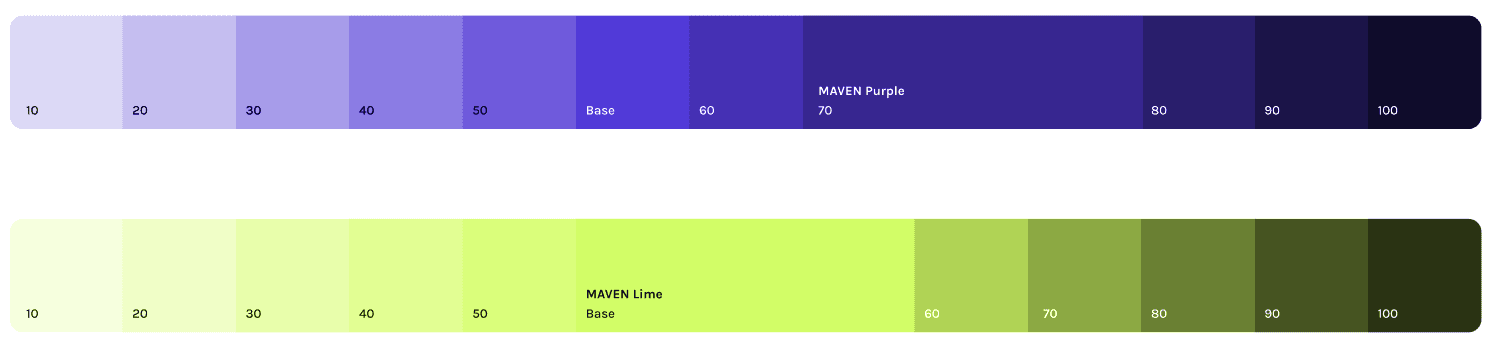
Selected color palette for UI & branding
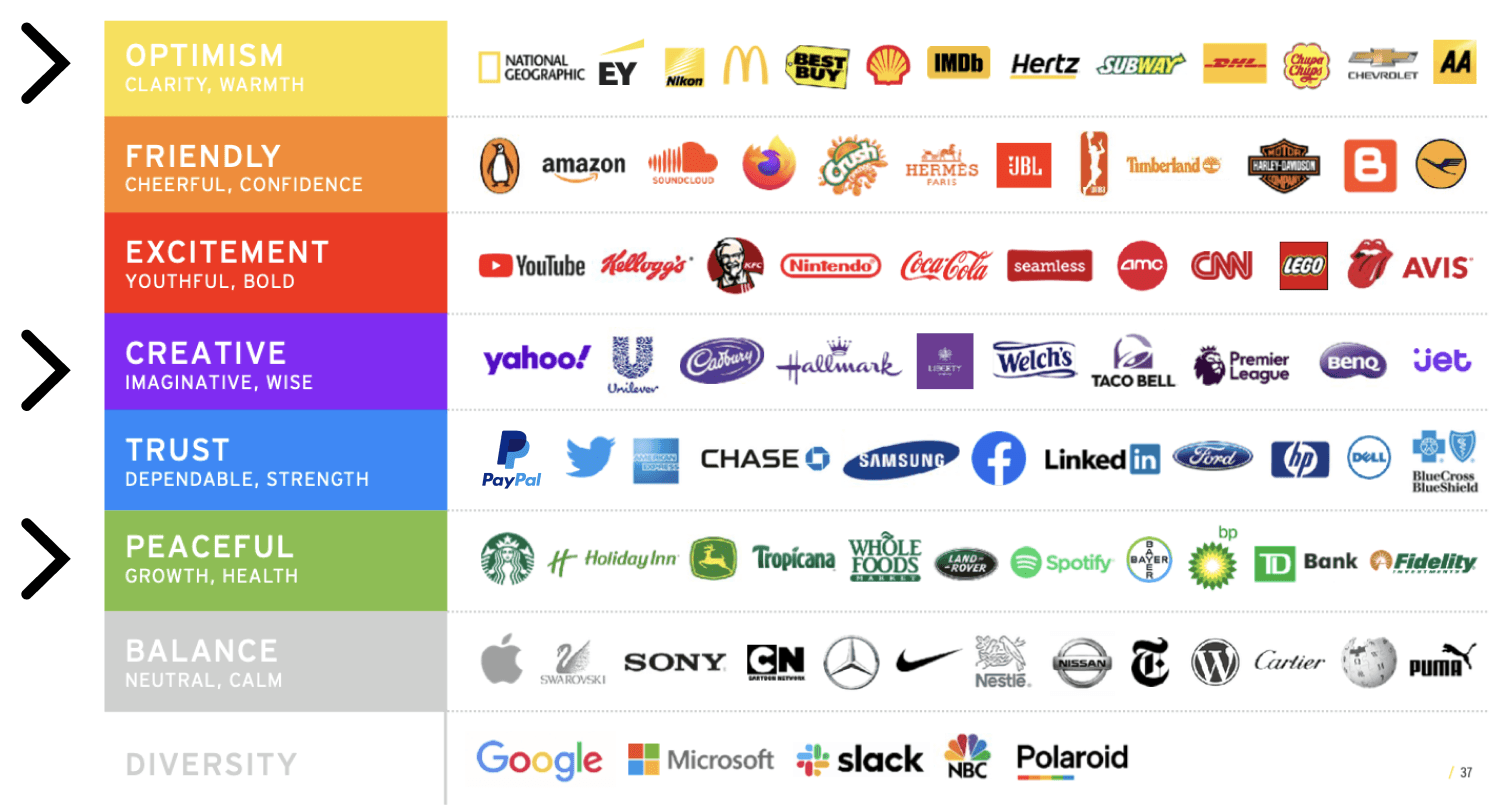
Brand color selection
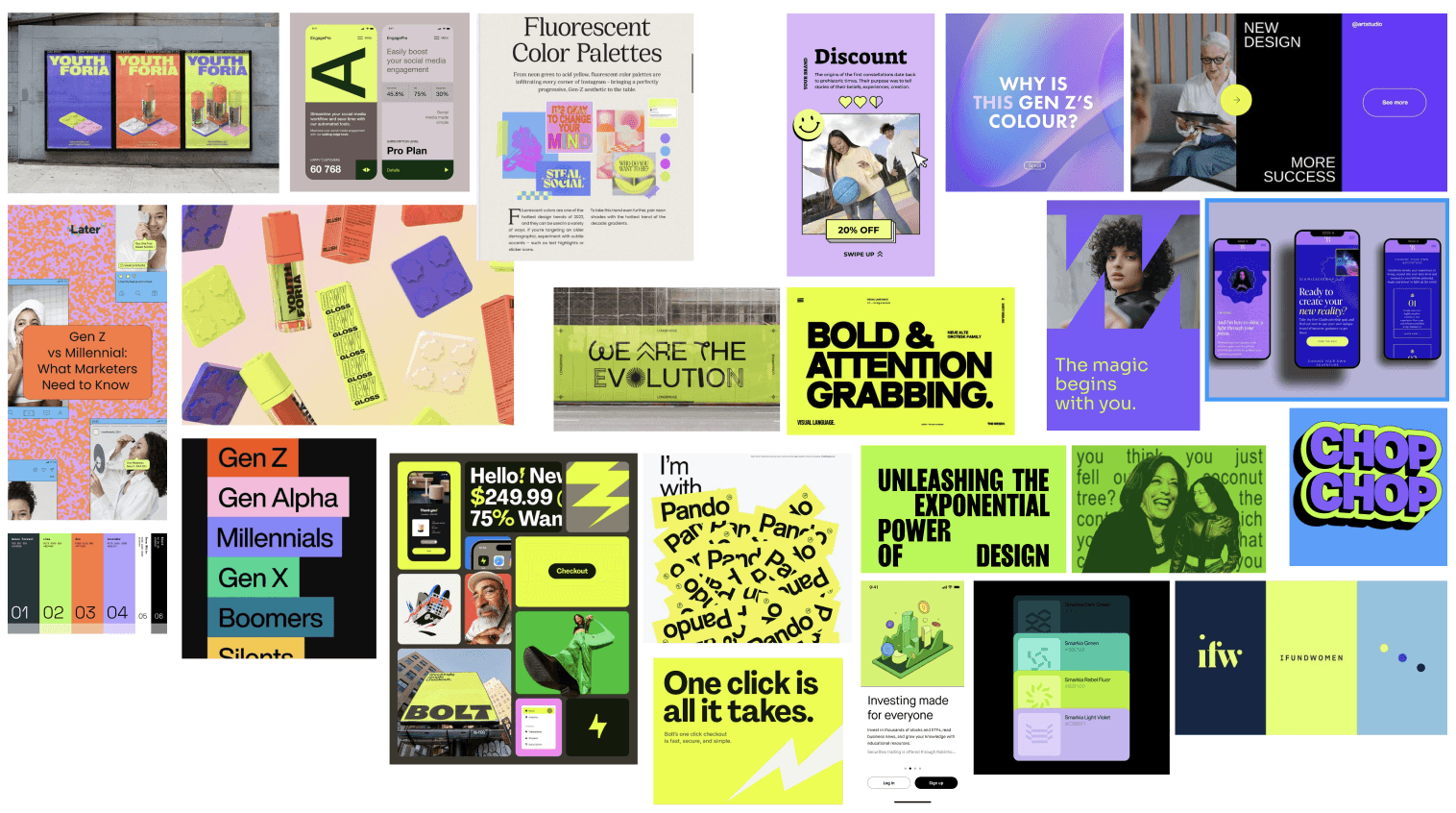
Moodboard inspiration
02 - Visual Implementation
Once we nailed down the visual direction, it was fast and furious. I started exploring UI visuals parallel to wireframes designed for functionality, working closely with my co-designer and creative director to keep each aspect as aligned as possible. Since the visuals were going to be a main selling point, there was no time to waste.
Brand visuals exploration
I began by compiling imagery, videos, conceptual visuals, and designing basic UI assets to begin building out screens.
began an asset library for rapid design once wireframes were finished
curated an influencer-inspired video & photo library
began exploring what the AI-powered chatbot experience would look like
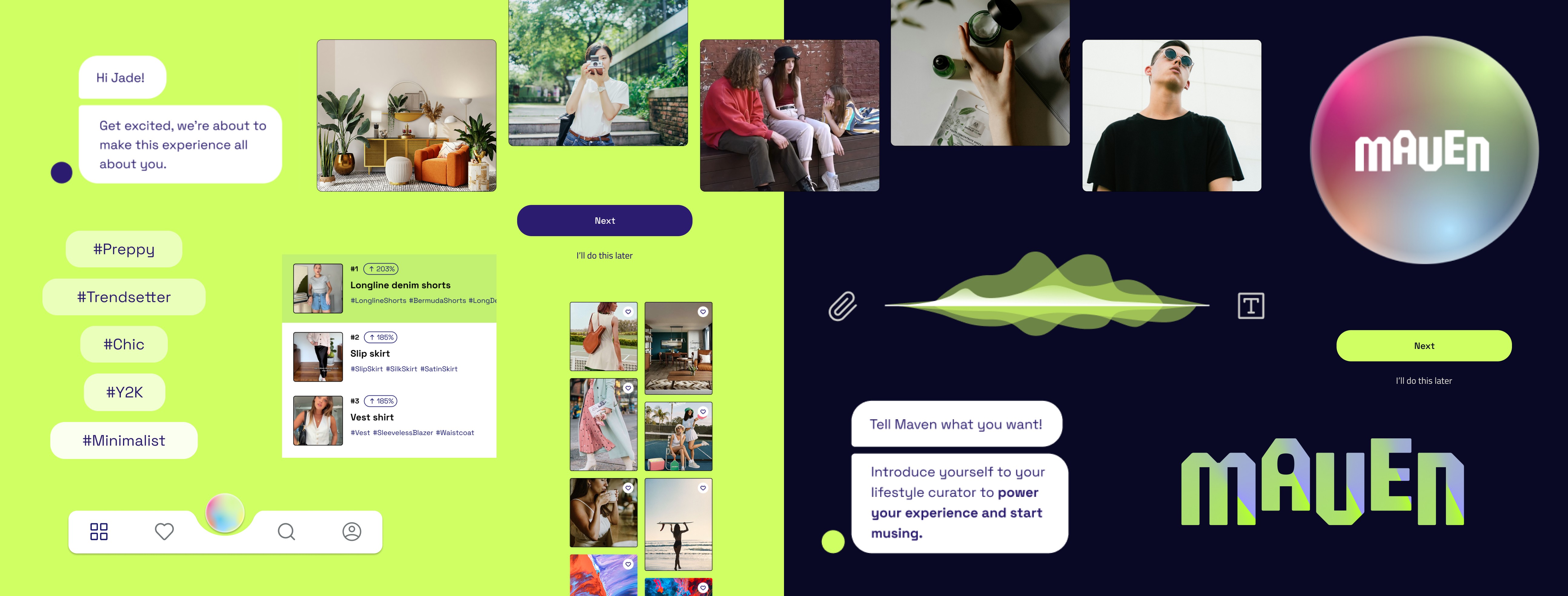
I spent extra attention to details like the brand voice, AI chatbot, and influencer-inspired content
UI design
Without finalized wireframes to implement UI into, I started by experimenting with different elements.
blending video and images into the UI seamlessly in a video-first social media world
visual elements and micro-animations that give an AI-powered brand a personality
asking "how can we design a UI that is both functional & accessible and playful & inspired?"
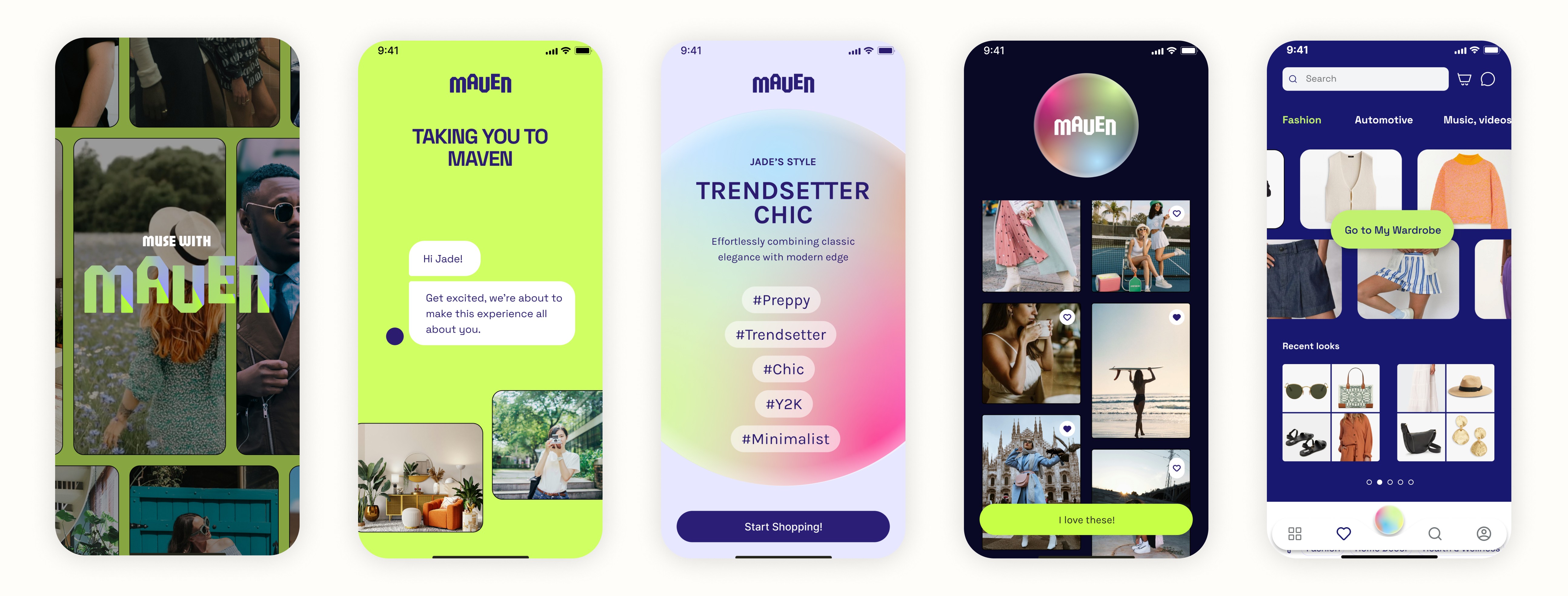
Initial visual exploration that would set the tone for the final screens
While wireframes were being designed, I worked closely with my co-designer and implemented the UI in parallel.
continued to bring the same tone into functional UI
was given the go-ahead to push the boundaries: designed for limitless scrolling, different ways to push trends & highlight brands, and expanded on a standard search page
Continuing to bring the same tone into functional UI
AI visualization design
A huge component of our concept – and a main selling point we couldn't get wrong – was our AI-powered personalization and chatbot.
designing a chatbot that is friendly and warm, learns your individual shopping needs, personal style, and recommends exactly what you're looking for
integrating the AI & chatbot seamlessly though the entire app experience
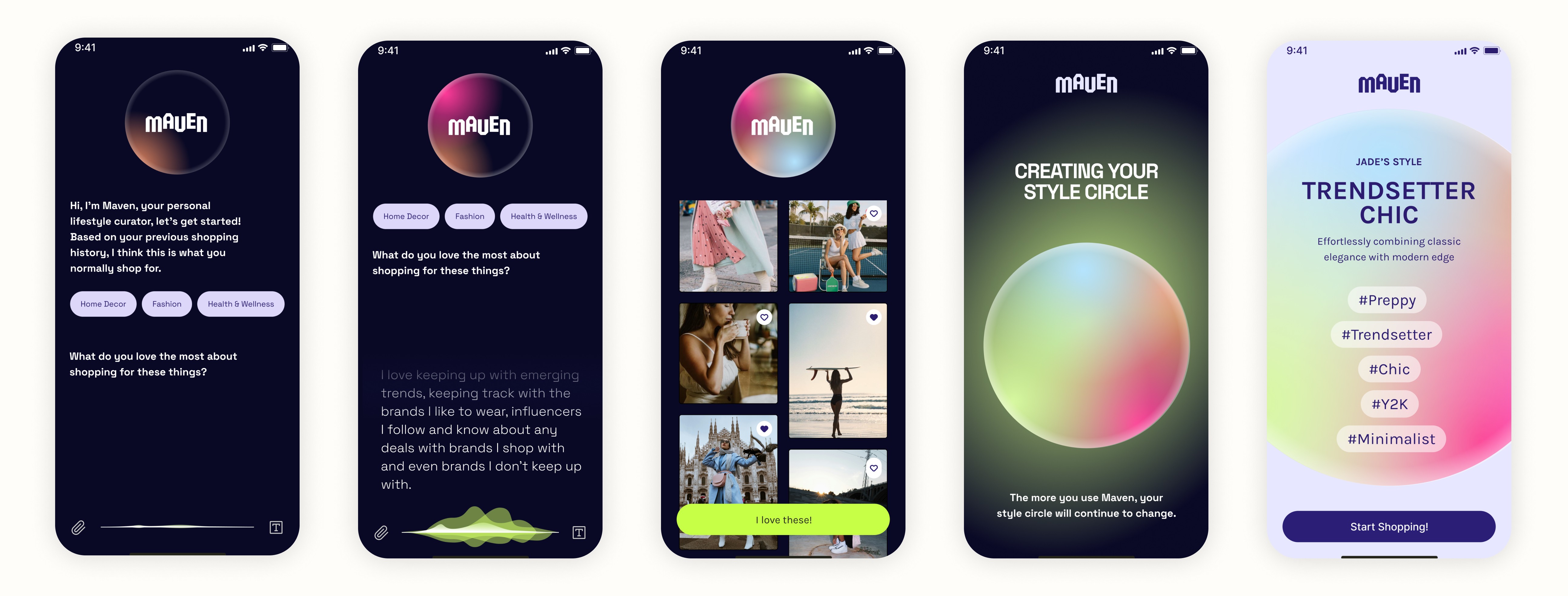
My first iteration (for an onboarding concept) which set the groundwork for our chatbot.
03 - Art of the Possible
During this rapid-fire project, our design team met the venture-building team for frequent feedback, and I personally rarely went a day without connecting with my creative director. Every screen design was pushed as we all asked – "what else is possible?"
Conversational AI assistance
My initial designs laid the groundwork for the level of integration, conversational tone, and visual elements of the AI-powered chatbot.
show value with initial interaction in onboarding
speak like a friend & offer both open-ended and guided conversation options
always accessible within every screen
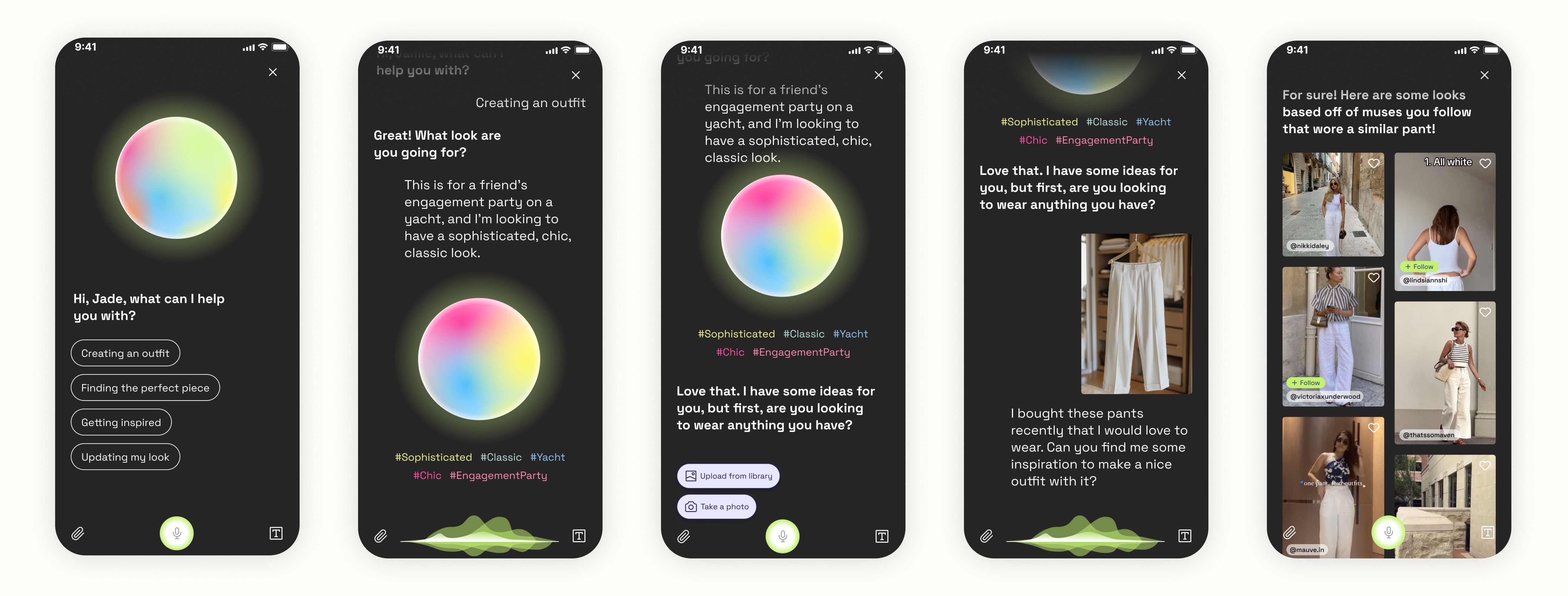
An early iteration of the AI-powered chatbot in styling action
Integrated shopping experience
While integration with social media was a priority, a seamless & integrated checkout experience was also a necessary component.
integration that doesn't feel forced & can be personalized to the consumer
incorporate point systems, brand loyalty, financial benefits, and other consumer perks
easily tailored & highlighted for product pitching
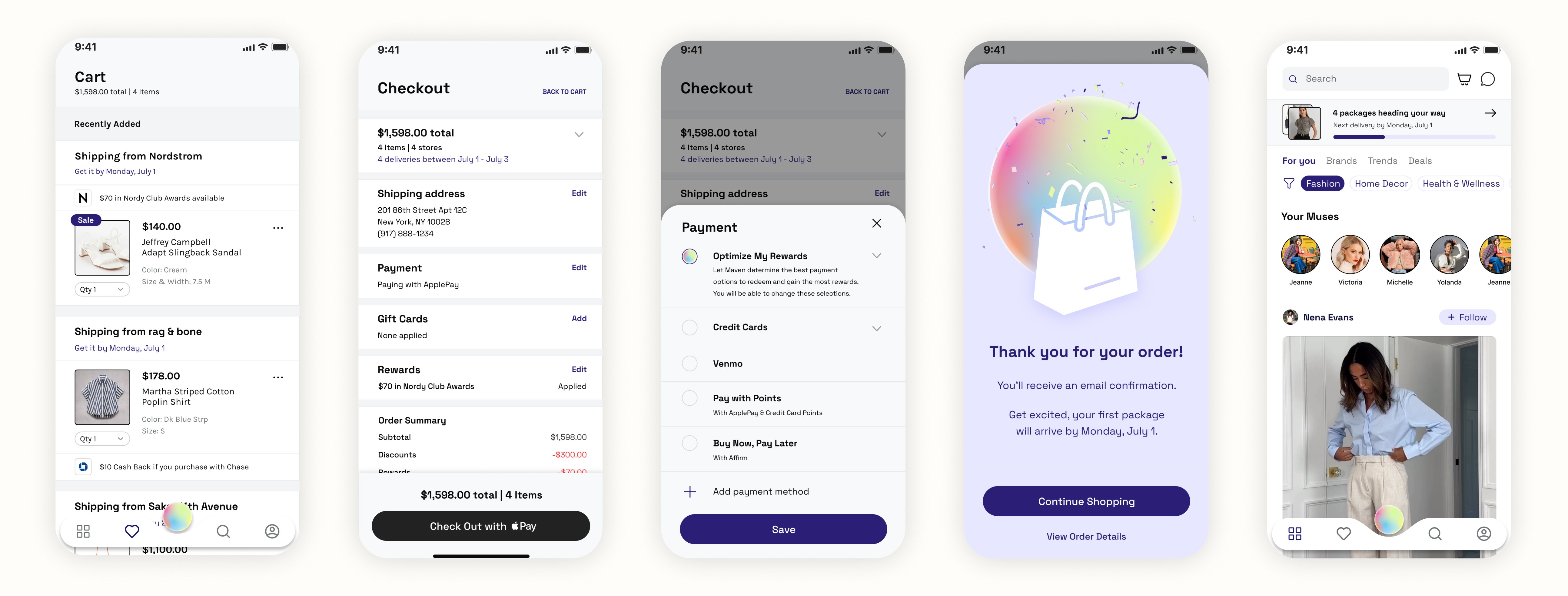
My initial designs for a full-circle checkout flow
Standing out in a sea of competitors
Some apps have mastered social media integration. Others, purchase-tracking and recommendations. Different apps are go-tos for AI suggestions. We wanted to combine the best aspects of all of them.
I did this by stepping back and looking at each page from a broader perspective. I constantly asked myself things like:
how can I make this feel more seamless and natural?
what will the user expect when they tap this?
what does the user actually want here?
what could I add here to make a potential investor's eyes sparkle?
Conceptual screens & animations I designed & prototyped to help sell the concept
04 - MVP Prototype
I stepped away from the project after the UI was established, initial concepts were finalized, and development work began. When it was time to prepare the pitches, I jumped back in to elevate the MVP prototype with attention-grabbing animations, ensure attention to detail, and to curate unique pitch materials.
Animations & microanimations
Having already prototyped the shopping screens in-line with applying visual design in earlier stages of the project meant that I could spent more time working on an exciting onboarding experience for the app pitch.
grab investors attention immediately
not going for perfection - but instead showing what is possible
Investor Value Proposition
I was given creative freedom in designing the onboarding screens. Some decisions I made:
in a video-first social media landscape, the first thing the user should see is a video
introduce the user to Maven AI quickly: keep it short and snappy, show its value, then immediately dive into the shopping experience
for potential financial investors, we designed an account-linking onboarding flow to offer immediate proposition value
Prototypes designed for pitch purposes
Interactive Journey App
My creative director and I worked together to lay out a step-by-step journey map of all the features we wanted to highlight to potential investors.
Once we had a rough sketch established, I utilized all of the designs and assets we had created to apply visuals to the map. Different versions of the journey map were created for different investor groups.
Scroll through the one of the final journey maps below:
Drag to explore interactive journey map
My Final Takeaways
When selling a product, the goal is not to sell perfection, but to sell the value of the possible.
It is my natural instinct to want to create something perfect. Especially when the majority of your day is creating for paying clients. But when creating a pitch – that all changes. This project refined my decision making skills deeply. When we were limited for time and could only choose so many ideas to flesh out deeply, I learned how to decide ahead of time what holds the most potential value.
Two truths can exist at once.